Recognize Execution, Not Just Ideas: The Shift That Builds Innovation Culture
From suggestion box to culture shift: the missing link is implementation

In a hurry? Here are the key insights:
A strong innovation culture is better measured by implemented ideas per employee, not submissions.
Mature programs with clear ROI started with intentional cultural transformation — not luck.
Many companies invest heavily in communication but fail to move from ideas to execution.
Effective change management (especially Role Modeling) is key to long-term engagement.
Recognizing those who implement valuable ideas creates the right kind of cultural ripple effect.
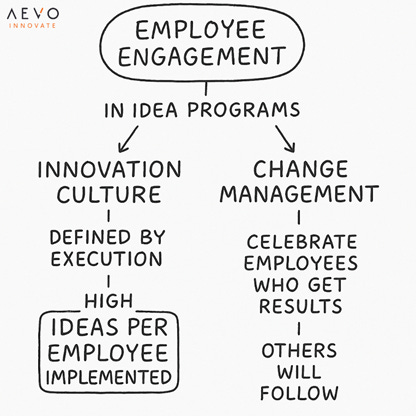
When people talk about "innovation culture," the conversation often drifts into the abstract. But I prefer a more concrete indicator:
A company with a strong innovation culture is one that has a high rate of implemented ideas per employee.
Not submitted ideas — implemented ones.
It’s easy to look at organizations that are already mature in their idea programs: high engagement, lots of ambassadors, and a track record of implemented projects with clear ROI. But we often forget that these companies started somewhere. What looks like culture today was once the result of an intentional change management process.
When companies launch idea programs — whether through innovation, continuous improvement, or operational excellence — they often begin with a strong communication push. There’s a big kickoff event. Emails are sent. Posters go up across the shop floor. Screens in the cafeteria play explainer videos.
This communication effort is valuable — and often necessary to go from zero to one.
But then comes the hard part: turning ideas into implementation.
This is where many programs stall. One of the biggest risks in idea programs is becoming a suggestion box: lots of ideas submitted, very few implemented, even fewer valuable.
To overcome this, companies must go beyond communication and start driving behavioral change. This is where structured change management comes in.
A classic 2016 McKinsey article outlines the four building blocks of change, and one of the most powerful in the context of idea programs is: Role Modeling.
In practice, this means that employees who contribute impactful ideas — and help implement them — are publicly recognized. This recognition happens in events, newsletters, corporate screens, and sometimes even with symbolic or experiential rewards.
These individuals become role models. Others see them and think: “If they can do it, I can too.” The result? A ripple effect of engagement that begins to look like culture.
But beware: what you choose to recognize becomes what people aim to replicate.
If you reward the people who submitted the most ideas, you might trigger a wave of meaningless suggestions. If you highlight those who implemented the most valuable ideas, you’re setting a different standard — one rooted in execution and impact.
Culture is what happens when consistent behaviors meet intentional reinforcement.
If you want a culture of innovation, build the conditions for people to act — and recognize those who turn ideas into results.
PS: recognizing the right contributors can be tough without a platform like AEVO Innovate. With workflows and a point system for implemented ideas, recognition becomes simple and transparent.